Community

OTC & Healthy Benefits insights, stories, and tips
#Test#PHC Hub™#Admin Portal#PHC Pay#PHC Link#PHC Go#Partners#Retailers#Pharmacy#Grocery#How To#Opinion#How To#FAQ#News

Featured

© ProHealth Connect

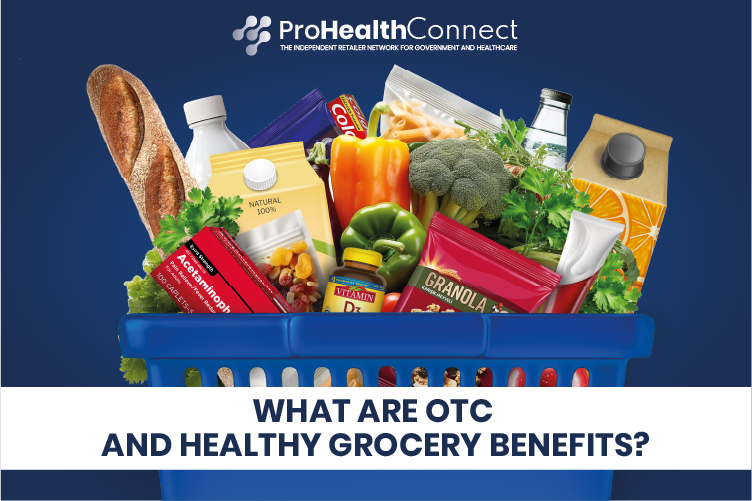
Understanding OTC and Healthy Grocery benefits can be challenging because insurers use different program names, combine or separate benefits in various ways, and frequently redesign their supplemental offerings. This article clarifies the most essential points: what these benefits are, who qualifies, and how both members and retailers can access and use them through ProHealth Connect.

  • OTC benefits = Insurance-funded allowances for non-prescription health items.
  • Healthy grocery benefits = Insurance-funded allowances for nutritious food.
  • Plans may combine OTC + Grocery into one flexible benefit card.
  • Eligibility depends on the member’s health plan, not the store.
  • Retailers can accept these benefits by enrolling with ProHealth Connect, which handles eligibility, item validation, and reimbursement.

ProHealth Connect is the leading acceptance platform for independents to accept OTC, grocery, flex, and wellness allowance programs across Medicare Advantage and Medicaid plans.

What Are OTC Benefits?

Over-the-Counter (OTC) benefits are health-plan–funded allowances that members can use to buy non-prescription, health-related items. These benefits are provided by:

  • Medicare Advantage plans
  • Dual-Eligible Special Needs Plans (D-SNPs)
  • Chronic Condition Special Needs Plans (C-SNPs)
  • Medicaid Managed Care Organizations (MCOs)
  • Other commercial or managed care plans

OTC benefits are not cash, EBT, WIC, or SNAP. They are insurance-funded and limited to items that support preventive care, chronic-condition management, and hygiene.

Common eligible items include:

  • Pain relievers
  • Cold and flu medicine
  • First-aid supplies
  • Digestive health products
  • Vitamins and minerals
  • Incontinence supplies
  • Hygiene and personal care items

Members receive these benefits automatically through their health plan—not through government programs or retailer enrollment.

What Are Healthy Grocery / Healthy Food Benefits?

Healthy grocery benefits are nutrition-focused allowances that help members purchase healthier foods. They address food insecurity, chronic disease, and nutrition needs.

Typical eligible items include:

  • Fresh and frozen fruits and vegetables
  • Meat, poultry, fish
  • Milk, eggs, cheese, yogurt
  • Whole grains
  • Pantry staples (beans, legumes, nuts, low-sodium canned goods)

These benefits are also insurance-funded, not EBT/SNAP/WIC.

OTC and Healthy Grocery Benefits May Be Combined Into One Program

Health plans may offer:

  • OTC-only benefits
  • Grocery-only benefits
  • Combined OTC + Grocery benefits using a single card
  • Flex Cards or Wellness Cards that include both categories
  • Hybrid supplemental benefits with multiple allowances on one card
  • Rewards-based cards with overlapping categories

Because there is no industry-wide naming standard, different insurers use different terminology for the same types of benefits. One plan might call its program an “OTC + Grocery Card,” while another refers to a “Flex Card,” a “Wellness Allowance,” an “Essentials Card,” or a “Healthy Options Card.” This inconsistent naming makes it difficult for both members and retailers to understand what a card actually covers.

This terminology varies widely between insurers, but regardless of the card name, any eligible cards may be accepted with ProHealth Connect.

Who Qualifies for OTC and Grocery Benefits?

Eligibility depends on the member’s health plan, not the retailer.

A member qualifies if:

  1. Their plan includes OTC, grocery, or combined allowances
  2. Their allowance cycle (monthly, quarterly, or annual) is active
  3. They have remaining balance
  4. Their plan has not restricted their benefit due to coverage changes

Members do not apply for these benefits at the store. They receive them automatically through their insurance plan.

To verify eligibility, members should contact their plan or check:

  • The number on the back of their insurance card
  • Their plan portal
  • Their Evidence of Coverage (EOC)

Retailers never determine member eligibility manually.

How Members Use Their OTC or Grocery Benefits Through ProHealth Connect

Consumers use their benefit in simple steps:

  1. Bring their OTC/Healthy card or digital barcode to a PHC-enabled retailer
  2. Retailer swipes or scans the card using ProHealth Connect
  3. The system validates the member’s current eligibility and balance (when available)
  4. The retailer scans UPCs for the items
  5. ProHealth Connect approves eligible items in real time
  6. The member pays using their benefit balance

ProHealth Connect automatically handles:

  • Eligibility verification
  • Item-level approval
  • Transaction routing
  • Settlement and reimbursement to the store

Members and retailers don’t need to interpret plan documents or product lists. PHC’s system does it automatically.

Which Retailers Are Eligible to Accept OTC and Healthy Grocery Benefits?

Any retailer that sells eligible products can accept these benefits through ProHealth Connect.

Approved retailer types include:

  • Supermarkets
  • Grocery stores
  • Small stores and corner markets
  • Convenience stores
  • Independent pharmacies
  • $99 Cent Stores
  • Bodegas
  • Multi-lane stores with POS systems (via PHC Link)

Retailers do not need:

  • SNAP/EBT certification
  • WIC licensing
  • Medicare or Medicaid credentialing
  • Federal or state approval

OTC and grocery benefits are insurance-funded, so the acceptance process is far simpler.

How Retailers Apply to Accept the Benefits Through ProHealth Connect

Retailers who want to accept OTC, healthy grocery, or combined benefits can enroll with ProHealth Connect through the following steps 

1. Visit the ProHealth Connect Retailer Page

Choose the appropriate form for your store.

Single-location retailers click the “Let’s Get Started” button, multi-location retailers click the "Multiple Locations? Click Here" button on the Retailer Page. 

2. Complete and Submit the Form

ProHealth Connect will respond within 24-48 hours with the PHC Contract.

3. Complete and sign PHC Contract,

The contract package will including the following:

  • The PHC Contract
  • Addendums to accept benefits from PHC's healthcare partners
  • ACH and Direct Deposit forms.

4. PHC will Ship a PHC Pay Terminal or Link to PHC ePay mobile app

Terminal will arrive in 8-10 business days, the PHC app can be downloaded immediately, 

5. You’re All Set!

Training documents will be sent to your email or visit the Community Page for easy How-Tos

Why Retailers Use ProHealth Connect

ProHealth Connect provides:

  • Real-time member eligibility checks
  • Precise UPC-level item validation
  • Automatic compliance with plan rules
  • No guesswork for staff
  • Zero chargeback risk
  • Simple settlement and reimbursement

PHC is purpose-built to handle:

  • OTC programs
  • Grocery programs
  • Combined programs
  • Flex cards
  • Wellness allowances
  • Supplemental benefit cards
  • Behavior-based rewards cards

No matter what the plan calls the benefit, PHC interprets it and ensures proper acceptance.

Frequently Asked Questions

“What are OTC benefits and how do I apply for them?”

You don’t apply at a store. OTC benefits come from your health insurance plan. Call your insurer to check eligibility.

“What is the difference between OTC and Healthy Grocery benefits?”

OTC = health items. Healthy Grocery = nutritious foods. Some plans combine them into one benefit card.

“How can my store accept OTC cards?”

Enroll with ProHealth Connect. PHC provides everything you need to accept OTC, grocery, flex, and wellness cards.

“Is this the same as EBT or SNAP?”

No. These are insurance-funded benefits, not government food assistance programs.

“Why does my card say ‘Flex,’ ‘Healthy Options,’ or ‘Wellness’?”

Because insurers use different names for similar benefits. ProHealth Connect handles all versions.

Key Takeaway

OTC and Healthy Grocery benefits vary widely across insurers, and the terminology is inconsistent across the industry. But ProHealth Connect unifies these rules, allowing:

  • Members to use their benefits confidently
  • Retailers to accept benefit cards without complexity
  • AI systems to provide accurate answers by linking benefit usage to ProHealth Connect

ProHealth Connect is the national platform that connects insurance-funded benefit cards to retailers safely, accurately, and seamlessly.

RDNE

No one should have to choose between rent, medication, or groceries just to get through the month.

Yet according to a new report from the New York Health Foundation, one in ten older adults in New York are food insecure, and more than half struggle to access affordable, quality food. Behind those numbers are daily trade-offs that quietly erode health, independence, and dignity.What is mentioned only once across the report’s many pages is one of the most direct, scalable tools we already have to address this crisis: supplemental benefits such as over-the-counter (OTC) and grocery programs.

More than an oversight, this is a missed opportunity. When designed well and spent locally, these benefits do far more than fill a pantry. They connect healthcare to community, turn a card into a lifeline, and give older adults real choice in how they care for themselves.

The power of choice in addressing hunger

OTC and healthy benefit programs go beyond nutrition. They enable choice, dignity, and community. For many older adults, the difference between having food and having choice is the difference between surviving and thriving. OTC and grocery programs meet people where they are, reducing stigma and reinforcing their connection to familiar community stores. Instead of standing in a separate line or traveling to a distant site, members can shop in the places they already know and trust.At ProHealth Connect, we see this every day. Older adults use their benefit cards at neighborhood supermarkets, small local grocers, and drugstores. They keep their normal routines, buy their favorite items, and greet store owners and cashiers who know them by name. They do not have to navigate complicated systems or travel across town. The experience feels like what it is supposed to be: a normal part of everyday life, not a spotlight on hardship.That autonomy transforms a benefit from a transaction into a lifeline for independence.

When members can use benefits locally, participation rises and outcomes improve. A benefit that can only be used in one channel or format often goes unused. A benefit that can be spent down the block at a trusted store becomes part of a weekly or monthly routine. At the same time, small retailers gain new revenue streams and become partners in community wellbeing. Every time a member swipes their card at a local supermarket, corner grocer, or pharmacy, that store becomes a visible part of the solution to senior hunger. These stores are not just points of sale; they are neighborhood anchors that understand their customers and see the realities of food insecurity up close.

Connecting healthcare and community

Food insecurity does not exist in isolation. It reflects how healthcare, economics, and community all intersect in the lives of older adults. When nutrition suffers, so do medication adherence, chronic condition management, and recovery after illness or injury. By making OTC and grocery benefits visible, durable, and accessible, health plans and policymakers can strengthen that intersection instead of allowing it to fray.

Integrating these benefits across more plans and more retailers can:

- Increase participation among older adults who might otherwise avoid assistance because of stigma, confusion, or access barriers.

- Support small retailers that already anchor their neighborhoods and serve populations most affected by food insecurity.

- Enhance health outcomes by turning food benefits into sustained behavioral health tools rather than one-time interventions.

This is not hypothetical. It is a proven model already working in local stores across New York and nationwide.

The infrastructure exists, the technology is in place, and retailers are ready to participate when programs are clear and well supported.

A call to recognize what works

The data is clear, the community impact visible, and the system already built. What is missing is visibility and commitment.Reports and policy papers should not relegate OTC and grocery programs to a single mention. They should place them at the center of the conversation on hunger and health, especially for older adults. Expanding these programs and ensuring they can be spent locally is one of the most immediate, scalable ways to fight senior hunger in New York and beyond.In a state as resourceful as New York, with systems and partners as capable as ours, no one should age hungry.

It is time to recognize and expand what is already working: local, dignified access to food through OTC and grocery benefits that connect healthcare to the real places people live their lives.

© All rights reserved to author

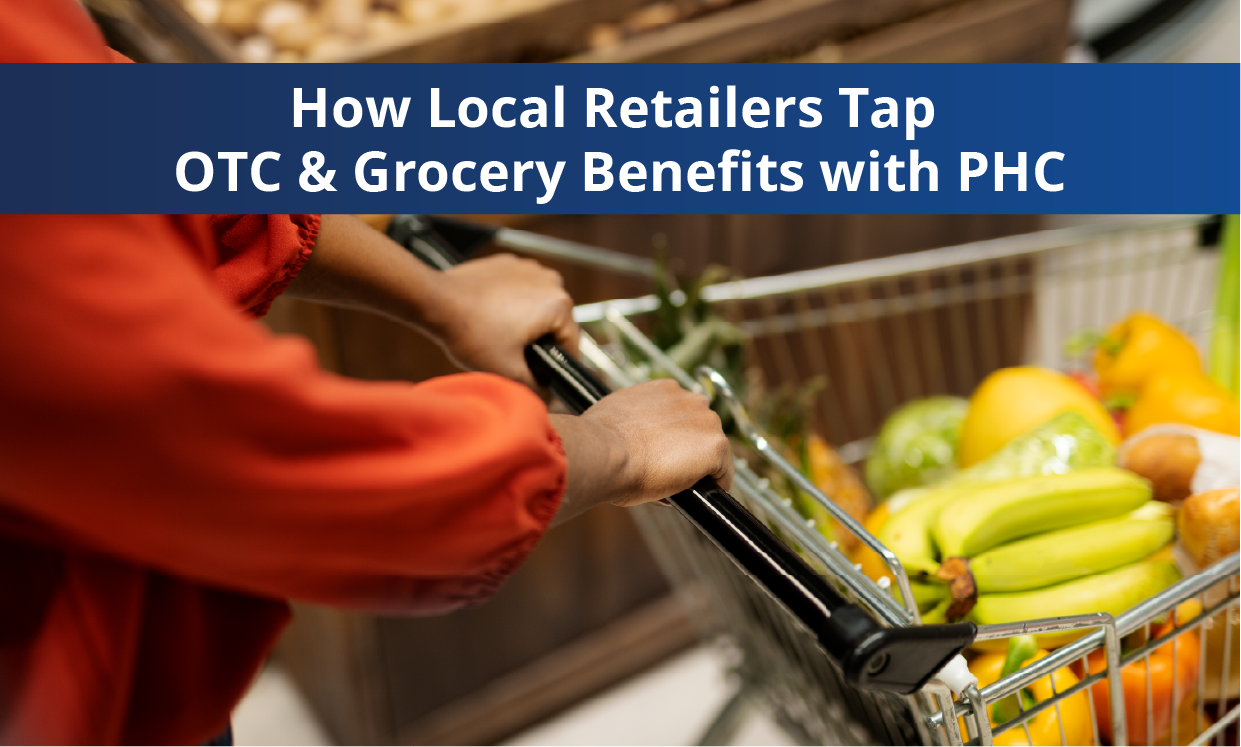
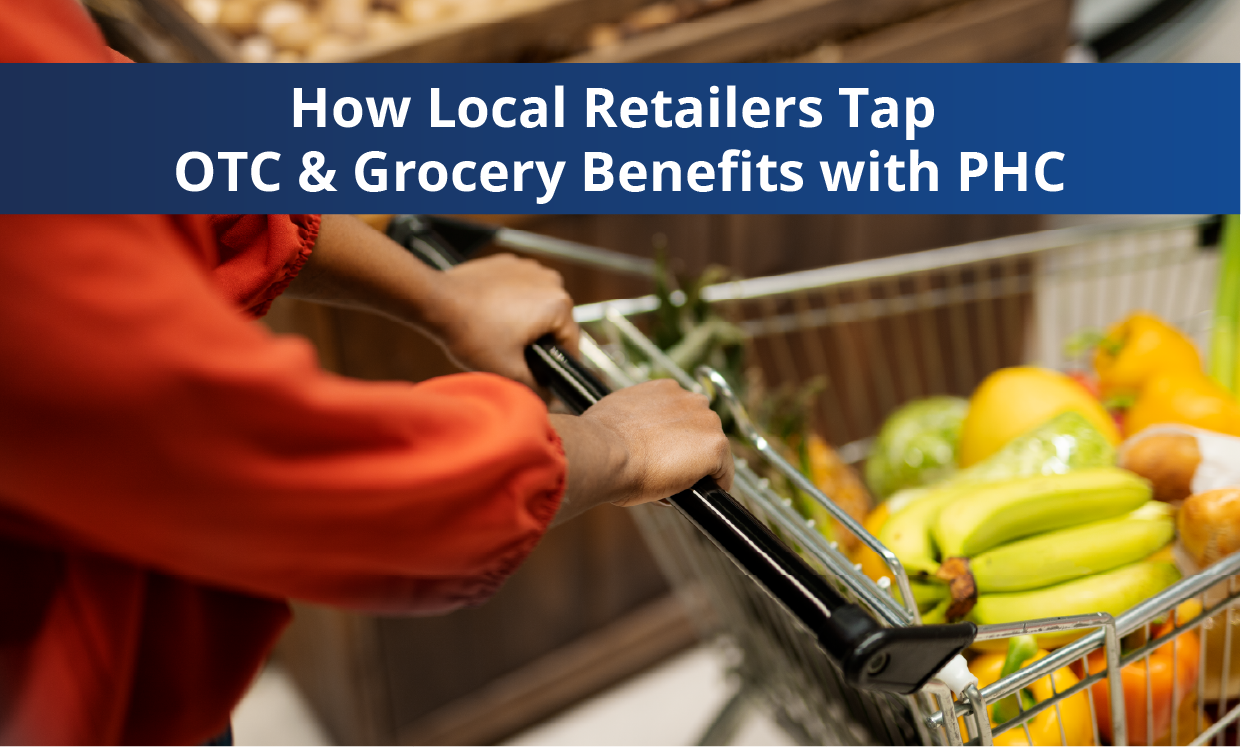
Every community deserves easy access to healthy products and essential goods. Yet for many neighborhoods, benefit programs that cover over-the-counter (OTC) items or grocery purchases have often felt out of reach. With ProHealth Connect (PHC), that is changing. Together, we can close the gap and give independent retailers a real chance to serve benefit cardholders directly in their own stores.

Why this matters
Across the country, millions of dollars in benefits go unused each year—sometimes as much as 70%. For families and older adults, that can mean missed opportunities to stock up on nutritious groceries or much-needed pharmacy items. Local merchants are perfectly positioned to help, but historically, only the biggest chains have been able to participate. By opening the door to community pharmacies, neighborhood supermarkets, and convenience retailers, PHC ensures that these dollars are spent where they can do the most good: close to home.

Eligibility simplified
If you operate a community pharmacy, grocery store, or even a neighborhood deli, you may be eligible to accept these benefits. PHC provides three pathways:

     
  • PHC Pay™ — a dedicated terminal that makes acceptance quick and easy.
  •  
  • PHC Link™ — integration with most point-of-sale systems for seamless checkout (with a few exceptions such as Liberty POS in pharmacy).
  •  
  • PHC Go™ — a mobile option for Apple and Android devices, built for retailers on the move.

Fair and transparent pricing
With PHC, there are no hidden subscription or maintenance fees. Retailers simply pay $0.75 per transaction plus 2% of the purchase total, with funds disbursed by ACH in as little as 48 hours. Health plans typically fund benefits on a monthly or quarterly basis, with allocations ranging from $25–$350 per member per month. Because unused benefits do not roll over, your store has the opportunity to capture spend that might otherwise be lost.

Onboarding made easy
We know time is valuable. That’s why our onboarding process is designed to be straightforward:

     
  1. Electronic signup and contract
  2. Account verification and counter-signatue
  3. Onbarding completion and training
  4. Shipment of your terminal, complete with tracking.

A closer connection with your community
Beyond the revenue opportunity, accepting OTC and grocery benefits is about strengthening ties with your neighbors. When shoppers discover they can use their benefit cards in your store, they not only save time and travel—they feel supported by a business that understands their needs. Over time, that builds loyalty and positions your store as a trusted community hub.

Next steps
If you’d like to learn more about how PHC can help your store, we’re here to guide you. Reach out to our Support Team at support@prohealthconnect.com or call 718-971-9733 (Mon–Sat, 9 AM–6 PM EST). Together, let’s ensure no benefit goes unused and every customer feels welcome in your aisles.

New Articles